ISAMU NOGUCHI DESIGN GUIDE 2026
If you have ever seen a coffee table that looks more like sculpture than furniture, or a paper lantern that gives a room a soft, architectural glow, you may already know Isamu Noguchi’s work without realising it.
Noguchi was one of the most important artist-designers of the 20th century. He was a sculptor, furniture designer, lighting designer, landscape artist and set designer whose career stretched across six decades. His work moved between fine art and everyday life, but it rarely treated those categories as separate.
The simplest way to understand Noguchi is this: he believed sculpture could be lived with.
That idea shaped everything from his famous Noguchi Table to his Akari Light Sculptures, gardens, playgrounds, public plazas and stage sets. His legacy is not just a collection of beautiful objects. It is a way of thinking about space, material, balance and human experience.
Who Was Isamu Noguchi
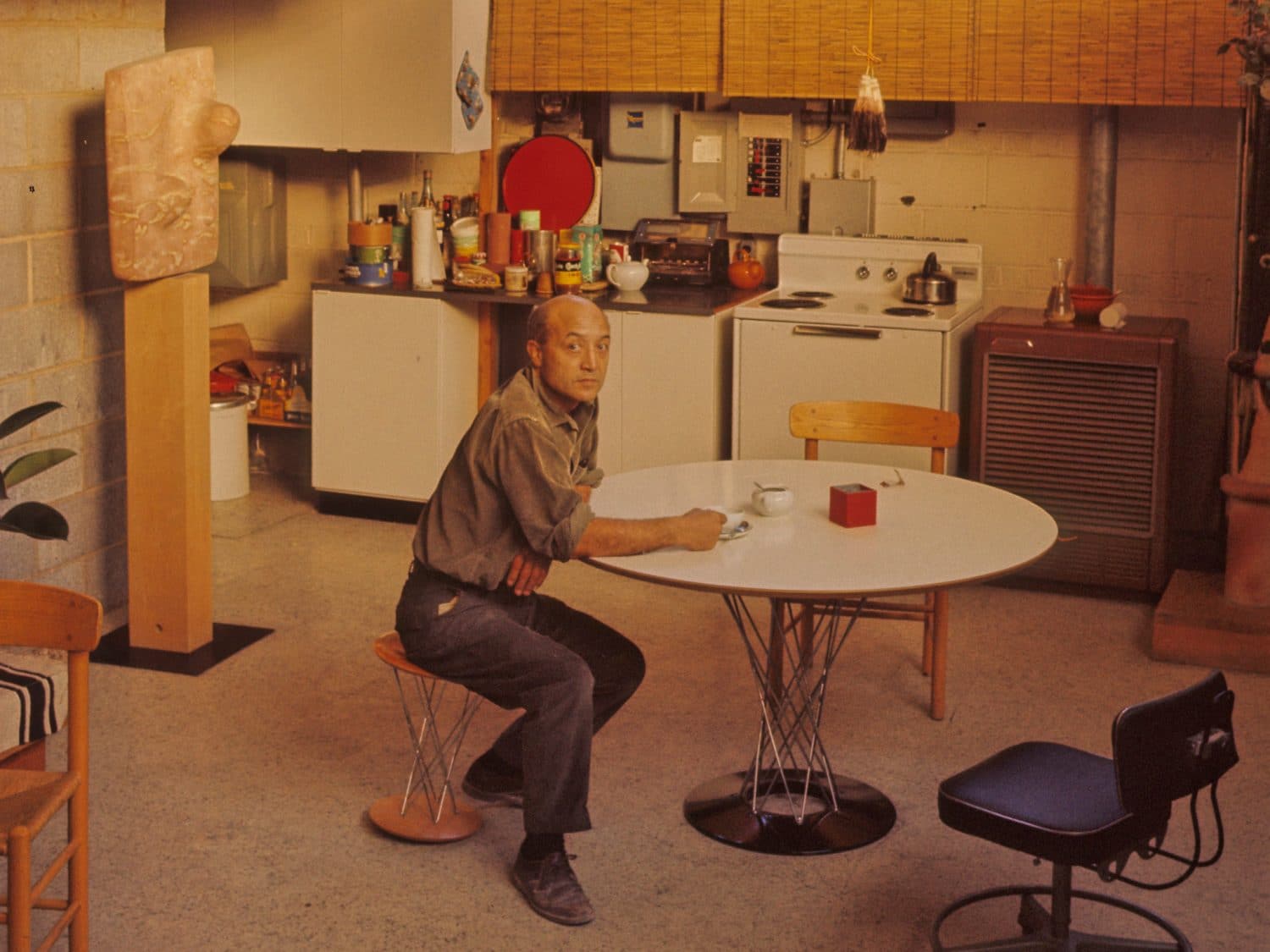
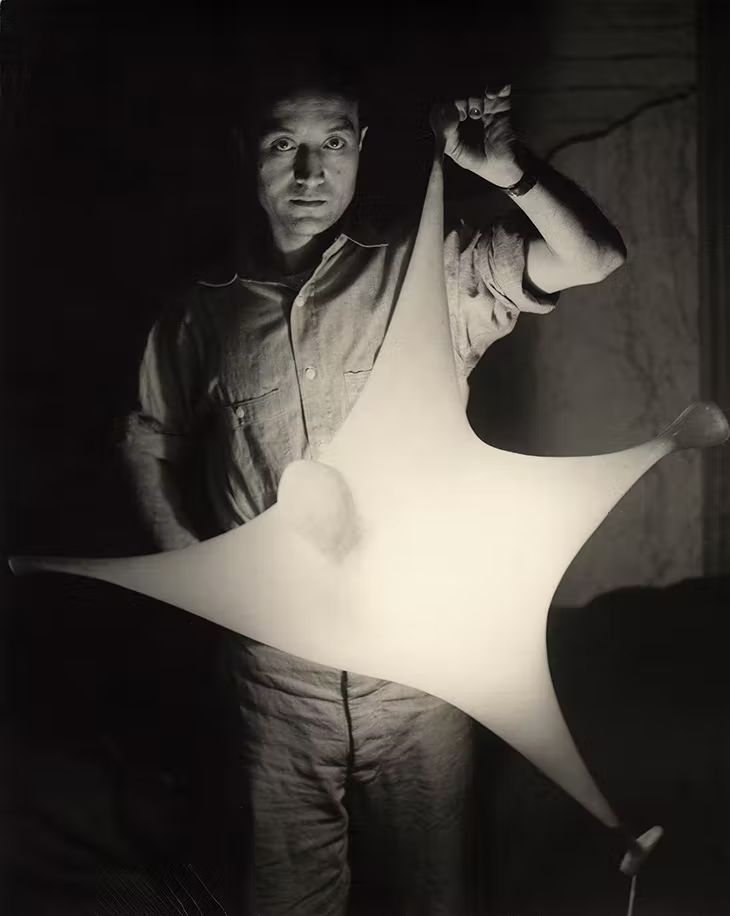
Isamu Noguchi was a Japanese-American artist and designer born in Los Angeles in 1904. He died in New York in 1988. Over his long career, he created sculpture, gardens, furniture, lighting, interiors, public spaces and theatre sets. The Smithsonian American Art Museum describes him as one of the most innovative American sculptors of the 20th century, with a career that ranged from landscape art and playground designs to patented lamps, furniture and modern dance sets.
Noguchi’s work is often described as a bridge between East and West, but that phrase can make his career sound simpler than it was. He was shaped by Japanese craft, American modernism, European abstraction and his own lifelong search for identity. He was never only a sculptor, and never only a designer.
That is what makes him so important. He did not see furniture, lighting, sculpture and public space as separate disciplines. He saw them as different ways to shape how people feel in the world.
Early Life and Artistic Development
Noguchi was born to a Japanese father, the poet Yone Noguchi, and an American mother, the writer Léonie Gilmour. His bicultural identity shaped much of his life and work. He spent part of his childhood in Japan before returning to the United States, where he later trained as an artist.
One of the most important moments in his early development came in Paris, where he worked as an assistant to Constantin Brancusi. Brancusi’s influence can be seen in Noguchi’s lifelong interest in simplified forms, smooth surfaces, organic shapes and the quiet power of material.
Noguchi did not simply copy modernist sculpture. He absorbed its lessons and made them more open. His work could be abstract, but it was rarely cold. Stone, wood, paper, bronze and glass were not just materials to him. They carried feeling, weight, memory and atmosphere.
Why Noguchi Matters in Design
Noguchi matters because he changed how design could behave in a room.
His best-known furniture and lighting designs are practical, but they are not purely functional. They have presence. They change the tone of a space. They ask to be used, but they also ask to be looked at.
Vitra describes Noguchi’s work as unusually multi-faceted, including sculpture, stage sets, furniture, lighting, interiors, outdoor plazas and gardens. It also notes that his sculptural interests extended beyond material and form into spatial effects and interior design.
This is the key to Noguchi’s design legacy. He was not designing objects in isolation. He was designing relationships:
- The relationship between object and room
- The relationship between light and shadow
- The relationship between furniture and body
- The relationship between sculpture and public life
The Noguchi Table
The Noguchi Coffee Table is one of the most recognisable coffee tables ever made. It combines a freeform glass top with two curved wooden base pieces that interlock to create a sculptural support.
Herman Miller describes the table as a balance between art and furniture, with a curved wood base and freeform glass top that remains sturdy and practical.
The reason the table works so well is that it conceals very little. You can see how it is made. The glass top reveals the base below, while the two wooden forms create tension, movement and balance. It feels simple, but not plain.
Akari Light Sculptures
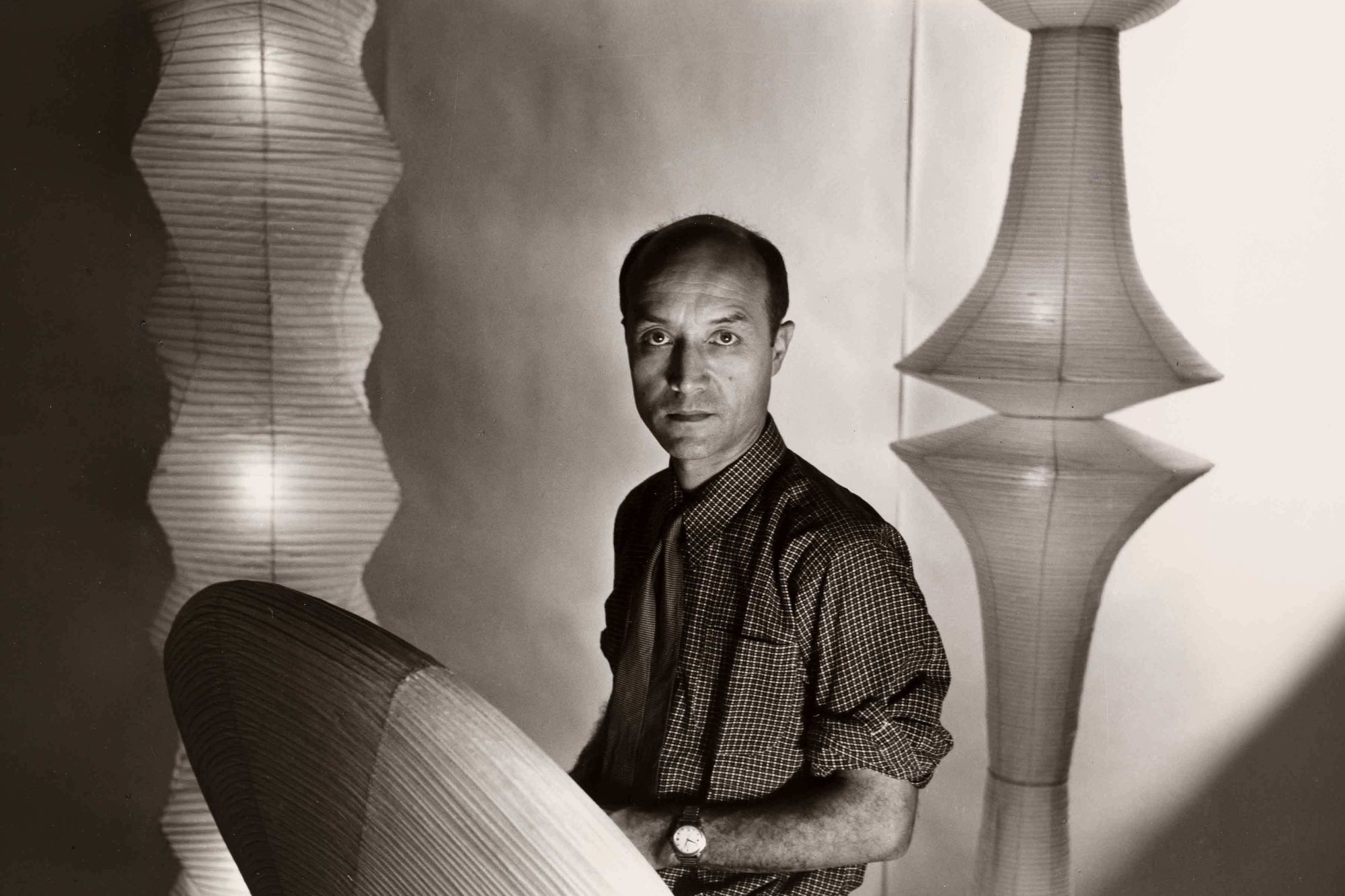
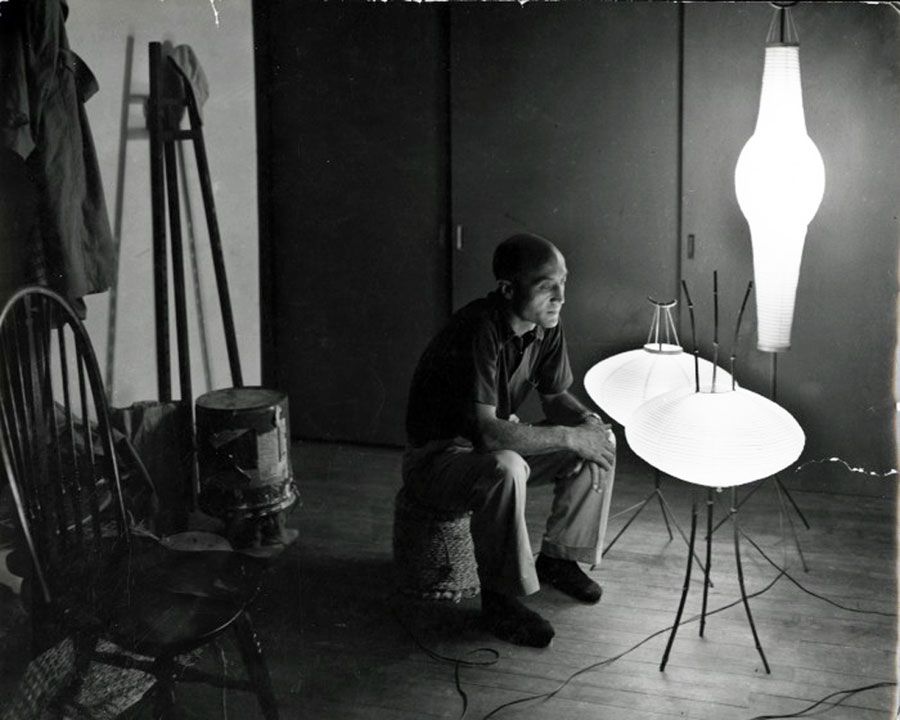
Noguchi’s Akari Light Sculptures are among his most influential designs. He began designing them in 1951 after visiting Gifu, Japan, a town known for traditional paper lantern production. Vitra notes that the Akari works were made from washi paper and bamboo, and that Noguchi created more than 100 models across table, floor and ceiling lamps.
The word “akari” means light in Japanese, carrying the sense of both illumination and lightness. This double meaning is important. These are not just lamps. They are sculptures made from light.
What makes Akari so successful is the way they soften electricity. Instead of a hard bulb in a hard fitting, Noguchi used paper to create warmth, diffusion and calm. The result is lighting that feels human rather than mechanical.
In modern interiors, Akari lamps are often used because they add softness without clutter. Their forms are sculptural, but their materials are humble. That balance is pure Noguchi.
Sculpture, Gardens and Public Space
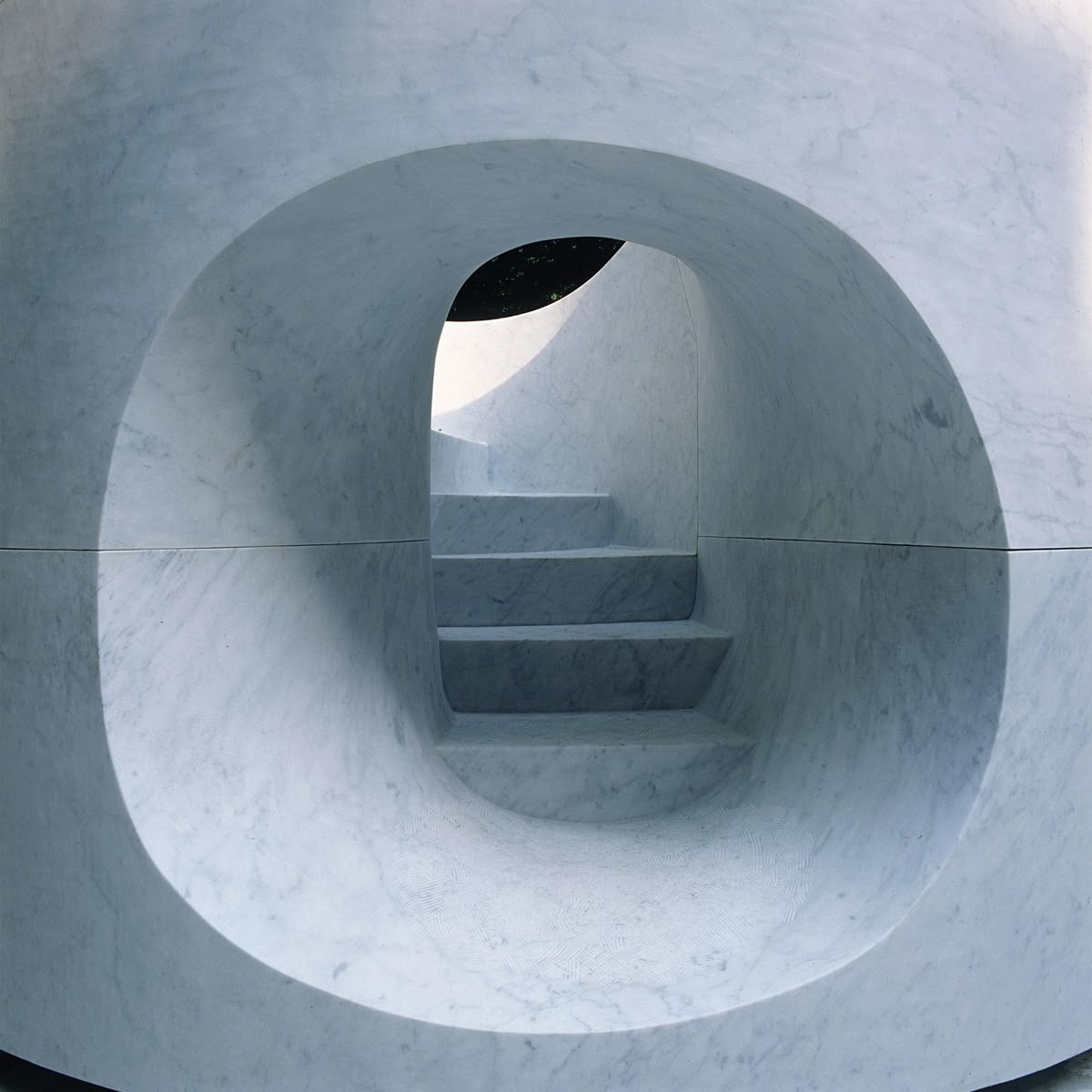
Noguchi’s work was not limited to objects for the home. He was deeply interested in public space. He designed plazas, gardens, playgrounds and environments that treated sculpture as something people could move through, sit near, gather around and experience physically.
The Smithsonian notes that his sixty-year career included landscape art, garden and playground designs, works connected to outer space and the atomic age, furniture, lamps, dance sets and costumes.
This broad range matters because it shows that Noguchi was not chasing categories. He was asking a larger question: how can art become part of life?
His public works often feel ancient and modern at the same time. Stone, earth, water and geometry appear again and again. Some pieces feel like archaeological fragments. Others feel like future landscapes. That tension is part of his power.
Noguchi and Modern Dance
Noguchi also designed stage sets for modern dance, most famously for Martha Graham. These collaborations helped him think about space in motion. A stage set could not simply sit beautifully in a room. It had to work with bodies, movement, light and time.
This theatre work influenced his wider design approach. Many of his objects feel dynamic even when still. The Noguchi Table appears to twist. Akari lamps float. His sculptures often feel as though they are in quiet movement.
That sense of motion is one reason Noguchi’s work does not date easily. It avoids stiff formality. It has life inside it.
How to Recognise Noguchi’s Design Style
Noguchi’s work is not hard to recognise once you know what to look for. It usually avoids excess. It is calm, sculptural and materially honest.
Common signs of Noguchi’s design language include:
- Organic shapes rather than rigid rectangles
- A strong balance between solid and void
- Natural materials such as wood, stone, bamboo and paper
- Soft asymmetry
- Sculptural forms with practical use
- A quiet relationship between Japanese craft and modern abstraction
- A sense of lightness, even when the material is physically heavy
The important point is that Noguchi’s work does not rely on surface decoration. The form is the decoration. The material carries the mood.
Why Noguchi Still Feels Modern
Noguchi still feels modern because his work answers a current problem: how to make interiors feel calmer, more human and less overdesigned.
Many contemporary homes are filled with clean lines but lack warmth. Noguchi’s work solves that by bringing softness, craft and sculptural presence into simple spaces. Akari lamps add warmth. The Noguchi Table adds movement. His stone and wood works add gravity.
His designs also fit naturally with the way people now mix styles. A Noguchi piece can sit with mid-century furniture, Japanese minimalism, contemporary design, brutalist architecture or soft neutral interiors. It does not need a themed room around it.
That flexibility is part of his legacy. His work is specific, but never narrow.
The Noguchi Museum
In 1985, Noguchi opened The Isamu Noguchi Garden Museum in Long Island City, New York, now known as The Noguchi Museum. The museum was designed by the artist himself and is located near the studio he had established in 1960. The Noguchi Museum describes it as the culmination of his commitment to public spaces, with galleries and an outdoor sculpture garden dedicated to his work.
This is important because the museum is not just a place that stores his work. It reflects his thinking. The building, garden and objects are meant to be experienced together. It shows Noguchi’s belief that sculpture is not separate from environment.
Quick Takeaways
- Isamu Noguchi was a Japanese-American artist and designer born in 1904
- His work included sculpture, furniture, lighting, gardens, playgrounds, public plazas and stage sets
- He believed art could serve practical, social and spatial functions
- The Noguchi Table is one of the most famous examples of furniture as sculpture
- Akari Light Sculptures transformed traditional Japanese lantern craft into modern lighting
- His work blends organic form, modern abstraction, Japanese craft and material honesty
- Noguchi’s legacy remains strong because his designs feel calm, timeless and deeply human
Conclusion
Isamu Noguchi was not simply a furniture designer, although his furniture is iconic. He was not simply a sculptor, although sculpture sits at the centre of his life’s work. He was a designer of relationships: between object and space, light and shadow, body and environment, tradition and modernity.
His work still matters because it refuses to separate beauty from use. A lamp can be sculpture. A table can be art. A garden can be a place of reflection. A public plaza can change how people move and gather.
For interiors, Noguchi’s lesson is clear. The best pieces do not need to shout. They need proportion, purpose and presence. His designs prove that an object can be quiet and still transform a room.
Frequently Asked Questions
Who was Isamu Noguchi?
Isamu Noguchi was a Japanese-American sculptor and designer whose work included furniture, lighting, public art, gardens, playgrounds and stage sets. He is best known in interiors for the Noguchi Table and Akari Light Sculptures.
What is Isamu Noguchi famous for?
He is famous for combining sculpture with everyday design. His most widely recognised designs include the Noguchi Table for Herman Miller and the Akari Light Sculptures.
What style is Isamu Noguchi?
Noguchi’s style is modern, organic and sculptural. It combines Japanese craft, American modernism, abstract sculpture and a strong interest in space, light and material.
What is the Noguchi Table?
The Noguchi Table is a sculptural coffee table with a freeform glass top and two interlocking curved wooden base pieces. It is one of the most famous examples of modern furniture design.
What are Akari lamps?
Akari lamps are paper light sculptures designed by Noguchi from 1951 onwards. They are made using traditional Japanese materials such as washi paper and bamboo, and are known for their soft, warm glow.
Why is Isamu Noguchi’s work still popular?
Noguchi’s work is still popular because it feels timeless rather than trend-led. His designs are simple, sculptural, warm and highly adaptable to modern interiors.
References
- The Noguchi Museum, Isamu Noguchi Biography.
- Smithsonian American Art Museum, Isamu Noguchi.
- Vitra, Akari Light Sculptures: Isamu Noguchi, 1951.
- Herman Miller, Noguchi Table Design Story.
- Herman Miller, Noguchi Table Product Details.
- MoMA, Isamu Noguchi Artist Record.
